Chapter 18: Linked Lists
18.1 Introduction to the Linked List ADT
Concept
Dynamically allocated data structures can be linked together in memory to form a chain.
A linked list is a sequence of connected data structures, called nodes, that are dynamically allocated. This allows a linked list to grow or shrink as needed during program execution. To add data, the program allocates a new node and inserts it into the chain. To remove data, it deletes the corresponding node.
Advantages of Linked Lists Over Arrays and vectors
While more complex to manage than arrays, linked lists offer significant advantages:
- Dynamic Sizing: A linked list can easily grow or shrink, and its size does not need to be known at compile time.
- Efficient Insertion and Deletion: Unlike
vectors, linked lists excel at inserting or deleting elements. In avector, inserting or removing an element in the middle requires shifting all subsequent elements, which can be time-consuming. In a linked list, these operations only require updating a few pointers, and no other nodes need to be moved.
The Composition of a Linked List
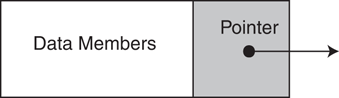
Each node in a linked list contains two main parts:
- One or more members for storing data (e.g., inventory records, customer information).
- A pointer that holds the address of another node.
This structure is illustrated in Figure 18-1.
A linked list is formed when each node’s pointer points to the next node in the sequence, creating a chain, as shown in Figure 18-2. The list is managed by a pointer called the list head, which points to the first node. Each subsequent node points to the next one, and the last node’s pointer is set to nullptr to mark the end of the list.

Note
Figure 18-2 depicts the nodes in the linked list as being neatly arranged in a row. In reality, the nodes may be scattered throughout various parts of memory.
Declarations
To create a linked list in C++, you first need a struct to define the node.
struct ListNode
{
   double value;
   ListNode *next;
};
In this ListNode structure:
valueis adoublemember that holds the node’s data.nextis a pointer that can hold the address of anotherListNodestructure.
Because ListNode contains a pointer to an object of its own type, it is a self-referential data structure.
Next, a pointer is defined to serve as the list head. An empty list is represented by a head pointer set to nullptr.
ListNode *head = nullptr;It is crucial to initialize the head pointer to nullptr before performing any operations on the list.
Checkpoint
18.1 Describe the two parts of a node.
18.2 What is a list head?
18.3 What signifies the end of a linked list?
18.4 What is a self-referential data structure?
18.2 Linked List Operations
Concept
The basic linked list operations are appending a node, traversing the list, inserting a node, deleting a node, and destroying the list.
This section develops a set of functions for linked list operations using the ListNode structure. The function declarations are typically stored in a header file, such as numberlist.h.
Contents of numberlist.h
#ifndef NUMBERLIST_H
#define NUMBERLIST_H

struct ListNode
{
   double value;
   ListNode *next;
};

void appendNode(ListNode *&head, double num);
void insertNode(ListNode *&head, double num);
void deleteNode(ListNode *&head, double num);
void displayList(const ListNode *head);
void destroyList(ListNode *&head);

#endif
This procedural implementation includes:
- A set of functions for appending, inserting, and deleting nodes.
- A
displayListfunction to show all values in the list. - A
destroyListfunction to deallocate all nodes, preventing memory leaks.
To create an empty list, a ListNode pointer is initialized to nullptr.
Appending a Node to the List
Appending a Node to a Linked List
Appending a node means adding it to the end of the list. The appendNode function takes a reference to the head pointer and a double argument, num. It creates a new ListNode, stores num in it, and adds the node to the end of the list.
The general algorithm is as follows:
Create a new node.
Store data in the new node.
If there are no nodes in the list
   Make the new node the first node.
Else
   Traverse the list to find the last node.
   Add the new node to the end of the list.
End If.
Here is the C++ implementation:
void appendNode(ListNode *&head, double num)
{
   ListNode *newNode;
   ListNode *nodePtr;

   newNode = new ListNode;
   newNode->value = num;
   newNode->next = nullptr;

   if (!head)
      head = newNode;
   else
   {
      nodePtr = head;

      while (nodePtr->next)
         nodePtr = nodePtr->next;

      nodePtr->next = newNode;
   }
}- Code Breakdown:
newNodepoints to the newly allocated node.nodePtris used to traverse the list.- A new node is created,
numis stored in itsvaluemember, and itsnextpointer is set tonullptrsince it will become the last node. - If the list is empty (
!head), the new node becomes the first node by settingheadto point to it. - Otherwise,
nodePtrstarts at theheadand traverses the list until it reaches the last node (wherenodePtr->nextisnullptr). - The
nextpointer of the last node is updated to point tonewNode, attaching it to the end.
Program 18-1 demonstrates this function.
🗊 Program 18-1
#include <iostream>
#include "numberlist.h"

int main()
{
    ListNode *head = nullptr;

    appendNode(head, 2.5);
    appendNode(head, 7.9);
    appendNode(head, 12.6);

    destroyList(head);

    return 0;
}
(This program displays no output.)
- Step-by-step execution of Program 18-1:
- The
headpointer is initialized tonullptr. - First call:
appendNode(head, 2.5)- A new node is created with
value2.5 andnextasnullptr. - Since
headisnullptr, theif (!head)condition is true. headis updated to point to the new node, making it the first in the list. (Figure 18-3 and Figure 18-4).
- A new node is created with
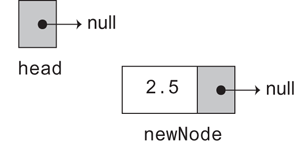
Figure 18-3 State of the headpointer and the new node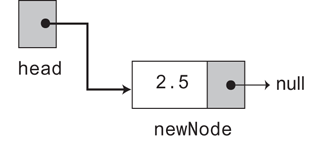
Figure 18-4 headpoints tonewNode- Second call:
appendNode(head, 7.9)- A new node is created with
value7.9 andnextasnullptr(Figure 18-5). headis notnullptr, so theelseblock executes.nodePtris initialized tohead(Figure 18-6).- The
whileloop’s conditionnodePtr->nextis false, so it does not execute. nodePtr->nextis set tonewNode, linking the new node to the end of the list (Figure 18-7).
- A new node is created with
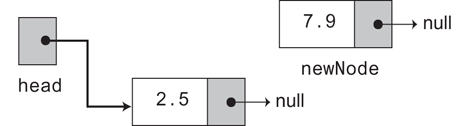
Figure 18-5 A new node is created 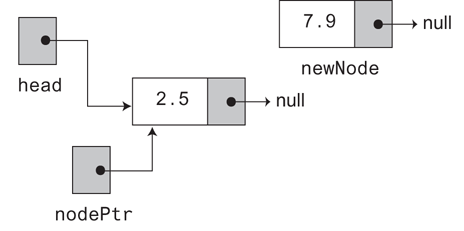
Figure 18-6 nodePtrpoints to the first node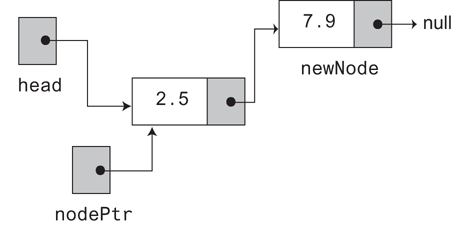
Figure 18-7 The new node is added to the list - Third call:
appendNode(head, 12.6)- A new node is created with
value12.6 (Figure 18-8). - The
elseblock executes, andnodePtris set tohead(Figure 18-9). - The
whileloop executes once, advancingnodePtrto the second node (Figure 18-10). - The loop terminates, and the new node is linked to the end of the list (Figure 18-11).
- A new node is created with
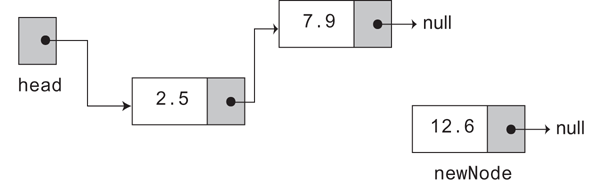
Figure 18-8 A new node is created 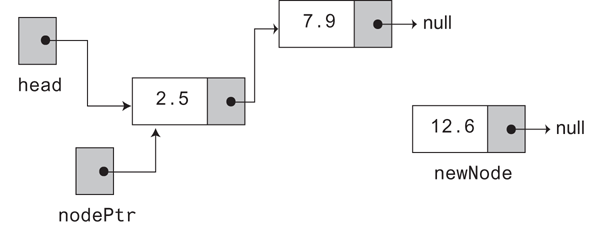
Figure 18-9 nodePtrpoints to the first node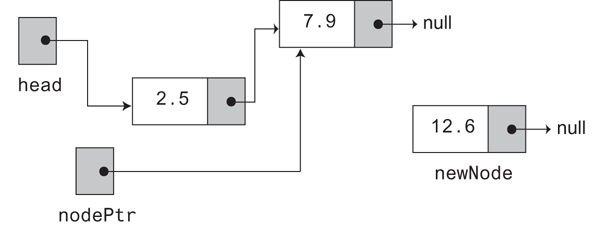
Figure 18-10 nodePtrpoints to the second node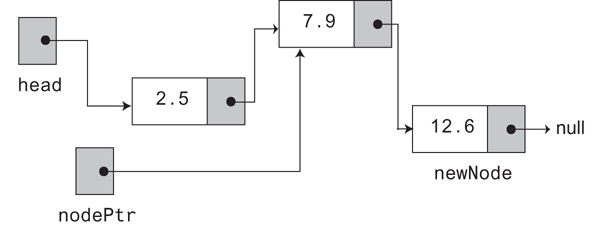
Figure 18-11 The new node is added to the list - Finally,
destroyListis called to deallocate all nodes.
- The
Traversing a Linked List
Traversing a list means visiting each node in sequence, typically to perform an operation like displaying its data. The displayList function demonstrates this process.
The pseudocode for traversing is:
Assign list head to a node pointer.
While the node pointer is not null
    Process the data in the current node.
    Advance the node pointer to the next node.
End While.
The C++ implementation of displayList:
void displayList(const ListNode *head)
{
    ListNode *nodePtr;

    nodePtr = head;

    while (nodePtr)
    {
        std::cout << nodePtr->value << std::endl;

        nodePtr = nodePtr->next;
    }
}
Program 18-2 shows this function in action.
🗊 Program 18-2
#include <iostream>
#include "numberlist.h"

int main()
{
    ListNode *head = nullptr;

    appendNode(head, 2.5);
    appendNode(head, 7.9);
    appendNode(head, 12.6);

    displayList(head);

    destroyList(head);

    return 0;
}
💻 Program Output
Traversal algorithms are fundamental to many linked list operations.
Inserting a Node
Inserting a Node in a Linked List
Inserting a node into a sorted list is more complex than appending. The goal is to add a new node while maintaining the list’s sorted order.
The pseudocode for this algorithm is:
Create a new node and store data in it.
If the list is empty
    Make the new node the first node.
Else
    Find the correct insertion point.
    Insert the new node at that position.
End If.
The insertion logic requires two pointers: nodePtr to scan the list and previousNode to track the node before the insertion point.
The traversal part of the algorithm:
nodePtr = head;
previousNode = nullptr;
while (nodePtr != nullptr && nodePtr->value < num)
{
    previousNode = nodePtr;
    nodePtr = nodePtr->next;
}
The complete insertNode function:
void insertNode(ListNode *&head, double num)
{
    ListNode *newNode;
    ListNode *nodePtr;
    ListNode *previousNode = nullptr;

    newNode = new ListNode;
    newNode->value = num;

    if (!head)
    {
        head = newNode;
        newNode->next = nullptr;
    }
    else
    {
        nodePtr = head;
        previousNode = nullptr;

        while (nodePtr != nullptr && nodePtr->value < num)
        {
            previousNode = nodePtr;
            nodePtr = nodePtr->next;
        }

        if (previousNode == nullptr)
        {
            head = newNode;
            newNode->next = nodePtr;
        }
        else
        {
            previousNode->next = newNode;
            newNode->next = nodePtr;
        }
    }
}
Program 18-3 demonstrates inserting a node into an ordered list.
🗊 Program 18-3
#include <iostream>
#include "numberlist.h"

int main()
{
    ListNode *head = nullptr;

    appendNode(head, 2.5);
    appendNode(head, 7.9);
    appendNode(head, 12.6);

    insertNode(head, 10.5);

    displayList(head);

    destroyList(head);

    return 0;
}
💻 Program Output
- Step-by-step execution of
insertNode(head, 10.5):- A new node with value 10.5 is created.
- Since the list is not empty, the
elseblock executes. nodePtrstarts athead(Figure 18-12).
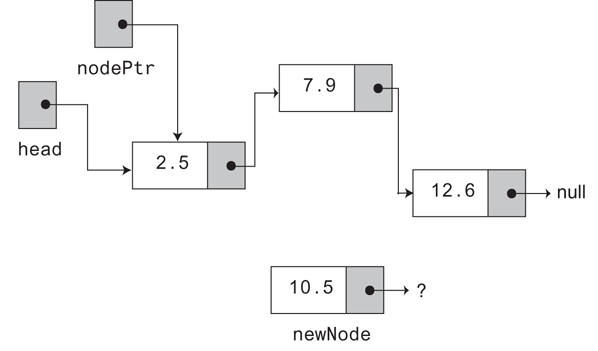
Figure 18-12 nodePtrpoints to the first node- The
whileloop iterates, advancingpreviousNodeandnodePtruntilnodePtrpoints to a node whose value is not less than 10.5 (the node with value 12.6) (Figure 18-13 and Figure 18-14).
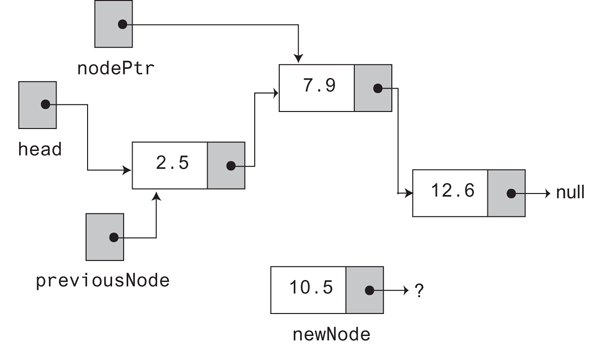
Figure 18-13 previousNodepoints to the first node andnodePtrpoints to the second node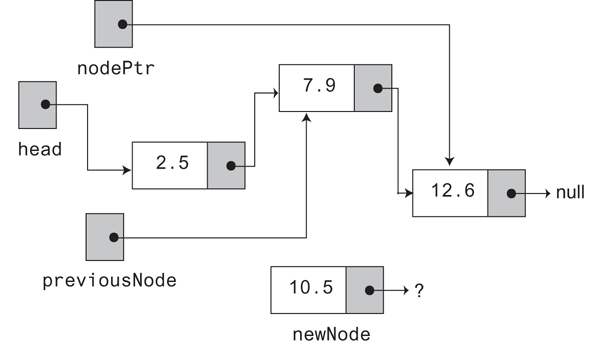
Figure 18-14 previousNodepoints to the second node andnodePtrpoints to the third node- The loop terminates.
previousNodepoints to the node with value 7.9. previousNode->nextis set to point tonewNode.newNode->nextis set to point tonodePtr, inserting the new node between the nodes with values 7.9 and 12.6 (Figure 18-15).
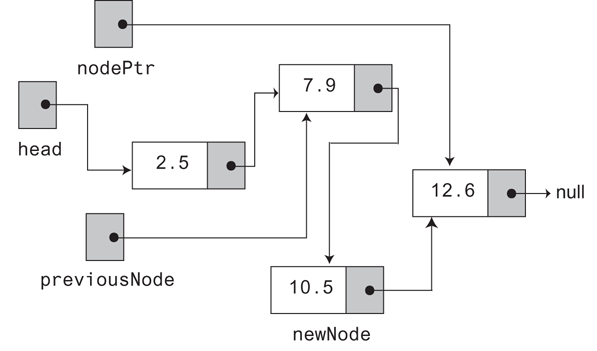
Figure 18-15 The new node inserted
Checkpoint
18.5 What is the difference between appending a node and inserting a node?
18.6 Which is generally easier to code, appending or inserting?
18.7 Why does the
insertNodefunction use apreviousNodepointer?
Deleting a Node
Deleting a Node from a Linked List
Deleting a node involves two steps:
- Remove the node from the list by adjusting pointers to bypass it.
- Free the memory allocated for the node using the
deleteoperator.
The deleteNode function finds a node with a specific value and removes it. It uses nodePtr and previousNode to traverse the list. When nodePtr finds the node to be deleted, previousNode->next is redirected to nodePtr->next, effectively unlinking the target node. Finally, the memory for the unlinked node is deallocated.
void deleteNode(ListNode *&head, double num)
{
    ListNode *nodePtr;
    ListNode *previousNode;

    if (!head)
        return;

    if (head->value == num)
    {
        nodePtr = head->next;
        delete head;
        head = nodePtr;
    }
    else
    {
        nodePtr = head;

        while (nodePtr != nullptr && nodePtr->value != num)
        {
            previousNode = nodePtr;
            nodePtr = nodePtr->next;
        }

        if (nodePtr)
        {
            previousNode->next = nodePtr->next;
            delete nodePtr;
        }
    }
}
Program 18-4 demonstrates the deleteNode function.
🗊 Program 18-4
#include <iostream>
#include "numberlist.h"

int main()
{
    ListNode *head = nullptr;

    appendNode(head, 2.5);
    appendNode(head, 7.9);
    appendNode(head, 12.6);

    std::cout << "Here are the initial values:\n";
    displayList(head);
    std::cout << std::endl;

    std::cout << "Now deleting the node in the middle.\n";
    deleteNode(head, 7.9);

    std::cout << "Here are the nodes left.\n";
    displayList(head);
    std::cout << std::endl;

    std::cout << "Now deleting the last node.\n";
    deleteNode(head, 12.6);

    std::cout << "Here are the nodes left.\n";
    displayList(head);
    std::cout << std::endl;

    std::cout << "Now deleting the only remaining node.\n";
    deleteNode(head, 2.5);

    std::cout << "Here are the nodes left.\n";
    displayList(head);
    return 0;
}
💻 Program Output
- Walkthrough of deleting the node with value 7.9:
- The function traverses the list until
nodePtrpoints to the node with value 7.9 andpreviousNodepoints to the preceding node (with value 2.5) (Figure 18-16).
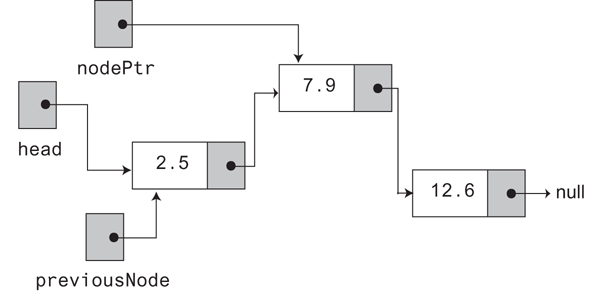
Figure 18-16 previousNodepoints to the first node andnodePtrpoints to the second node- The statement
previousNode->next = nodePtr->next;is executed. This redirects thenextpointer of the first node to point to the third node, bypassing the second node (Figure 18-17).
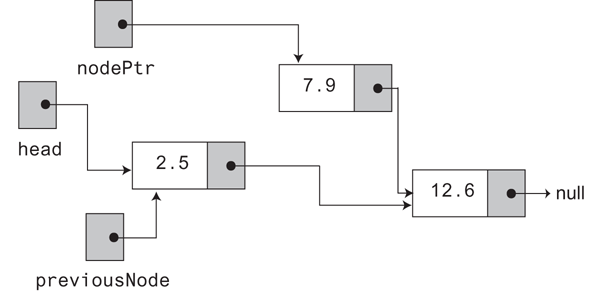
Figure 18-17 Node removed from the list - The
delete nodePtr;statement then frees the memory occupied by the unlinked node.
- The function traverses the list until
Destroying the List
To prevent memory leaks, all memory used by the list must be deallocated. The destroyList function traverses the list, deleting each node one by one.
void destroyList(ListNode *&head)
{
    ListNode *nodePtr;
    ListNode *nextNode;

    nodePtr = head;

    while (nodePtr != nullptr)
    {
        nextNode = nodePtr->next;

        delete nodePtr;

        nodePtr = nextNode;
    }
    head = nullptr;
}
A nextNode pointer is necessary to hold the address of the next node before the current node (nodePtr) is deleted. After destroying all nodes, head is set back to nullptr.
Checkpoint
18.8 What are the two steps involved in deleting a node from a linked list?
18.9 When deleting a node, why must you first unlink it before using the
deleteoperator?18.10 What might eventually happen in a large program that uses linked lists if a function like
destroyListis not called to free the memory?
Reversing the List
typedef ListNode *link;

link reverse(link head) {
    link current = head;
    link prev = nullptr;
    link next_node = nullptr;

    while (current != nullptr) {
        next_node = current->next;

        current->next = prev;

        prev = current;
        current = next_node;
    }

    return prev;
}